

A day of AI that definitely delivered
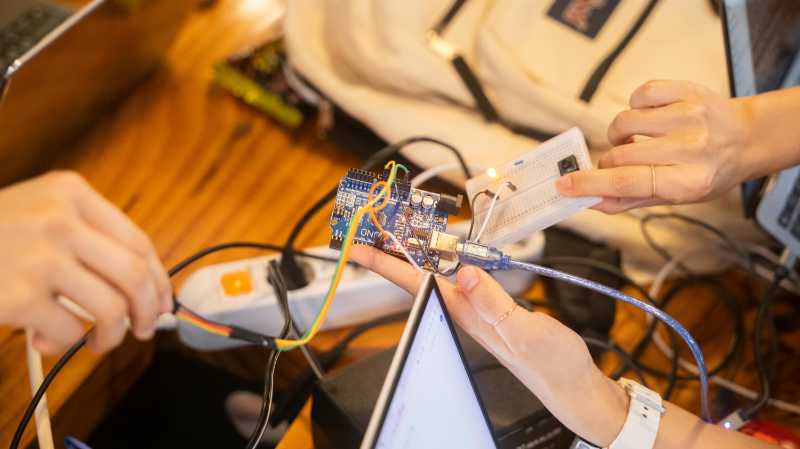
We were out at an event last week termed an ‘AI hackathon’. Which sounds more nefarious than it is.
But the world’s favourite new plaything shows no signs of slowing up. It’s everywhere. It’s everything. It’s all at once. I read an article recently about the importance of using it for purposes that are genuinely beneficial to the world. Seems like it should go without saying, right? Evidently not.
Anyway, this was genuinely beneficial… to us, and potentially to the world (though let’s start small). It was run by Rob Dixon of Dixon AI – one of those Business Management leaders who’s pivoted and now sits firmly in the AI space – as part of a Vistage session.
He told us his usual format runs over three days:
Day 1: Learning what’s possible with AI
Day 2: Building skills in the space
Day 3: Actually building something.
Lo and behold, we did it all in one day. Pedal to the metal.
What struck me, looking back, is how different this was from most events. You can go to a conference, seminar, whatever you want to call it, and be fairly confident you’ll leave with a few notes, maybe a bit of inspiration… but nothing concrete. Nothing you can really hang your hat on.
This was the opposite.
Rob opened with a line like: “If you don’t build something today that you actually end up using… you’ve failed.”
No pressure then.
We started with a survey – where are you, where’s your business, how are you currently using AI – and then moved pretty quickly into prompt building and developing tools.
Given we had a decent chunk of the Smoke Screen tech team there, things escalated quite quickly.
Within a few hours, I’d built something that searched retail crime data in real-time and plotted it on a UK heat map. The idea being that if you’re a loss prevention manager or security lead, you can quickly get a sense of what’s happening where and pivot resources to deal with the most mission critical cases.
Jack and James went and built something that tackles a very real pain point for us – customers not quite knowing what they want or need.
Normally that means site visits, drawings, back-and-forth, a fair bit of time.
What they created lets you upload photos of a site and suggests optimal placement for smoke units. Rough positioning, coverage, even a basic price estimate. Not perfect, but surprisingly accurate given the speed with which they hashed it out.
Jack also found time to build a game at some point, which tells you everything you need to know about his technical nous and his dizzying efficiency.
Meanwhile, Scott built a tool that takes a news story and reframes it through the lens of: ‘would fog have helped here?’ – pairing copy with imagery to create a nice little live stream of material. That sort of thing obviously still needs oversight, as does anything with AI, but as a starting point from a marketing perspective it’s incredibly strong.
It’s easy to get lost in your little business bubble when you’re at one of these things, but there were plenty of other people there giving their own twist to the tech. One guy in pharmaceuticals built an AI-driven avatar that staff could speak to about regulations and FAQs. Instantly useful, immediately applicable, and pretty bloody impressive.
That was probably the most powerful part of the whole day: everything had a purpose.
It ties into a much wider conversation around AI at the moment. For all the endless chatter about speed, automation, replacing roles, producing stuff, all the rest of it… I am seeing a lot more scrutiny too. Questions around accountability, quality, and responsibility when something goes wrong.
Towards the end of proceedings, Rob said something that struck a chord in that respect. Something he could probably have hammered home even more:
You’re responsible for the quality of the work. You can’t blame AI.
Control is central to these wild times, and he framed it in a way I quite liked. “We used to operate in a knowledge-based economy; now we’re moving into something more purpose-based.”
Which really just means the ‘why’ matters more than ever. What are you actually trying to do? What problem are you solving? What’s the point of the thing you’re building?
The old model was: purpose → execution → judgement. Nowadays, execution is the easy bit. So if your purpose is off, you just end up producing the wrong thing… very efficiently. Which is why judgement now takes up more of the time.
Engineers still need to make things that are safe and credible. Marketing still needs to sense-check tone and brand. The fundamentals haven’t disappeared – if anything, they’ve become more important.
With less human interaction and more automation around every corner, the feedback loop is already shrinking, and it’s not a stretch to see a version of this where that loop disappears altogether. Not ideal, if you ask me.
At this event, even the most basic tools people built – scheduling aids, pipeline analysis, that sort of stuff – were immediately useful. Actual, tangible improvements they then scrutinised.
AI might be changing everything, but it’s also changing nothing at all. You still have to show your value, care about the quality of what you produce, put the work in. Otherwise, you’re just accelerating your way to something fairly average.
But yeah… it was so refreshing to have that level of expectation placed on you at the start. “Build something useful or you’ve failed.” Something that simple rather sharpens the mind.
And it’s probably not a bad blueprint more generally – for events, for AI, maybe even for how you spend your time.
Come away with something that actually matters. Otherwise, what was the point?