

What elite winter athletes can teach us about strength and resilience…
I am one happy man.
From the Six Nations and T20 World Cup to the Winter Olympics, there is an embarrassment of sporting riches to choose from at the moment. And I am loving it!
Over the past week, I’ve found myself glued to the coverage of the Games in Milano Cortina. From curling to the bobsleigh, I enjoy watching the full spectrum of winter sport – not least because many of these disciplines only briefly emerge from sporting obscurity every four years and must be celebrated whilst we have the chance!
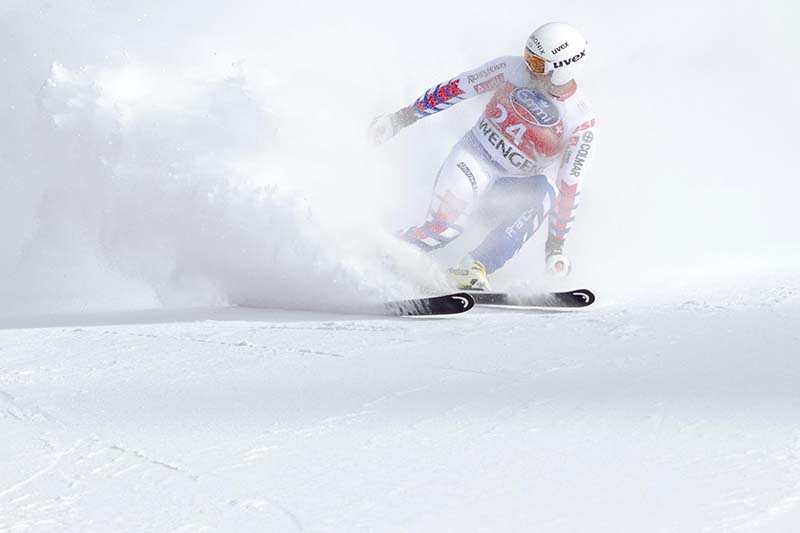
That being said, as a keen skier myself, I do have a particular soft spot for the alpine events.
Having recently returned from a skiing trip to the Livigno region of Italy, I can confirm with absolute certainty that those slopes are unforgiving (I’ve only just managed to lose the bruises!) So watching the brilliant Johannes Høsflot Klæbo cruise to a sixth Olympic gold medal in the men’s skiathlon last weekend was a genuine privilege. That man is on another level!
Yet, as ever with the Olympics, moments of brilliance sit alongside moments of heartbreak. Whatever your nationality, I think everyone was exceptionally sad to see the American skier Lindsey Vonn crash out in such brutal fashion on Sunday.
As I watched the skiers before her navigate those opening sections, I kept thinking how difficult it was going to be. The traverse was bumpy, awkward, and demanded absolute precision. And with Vonn coming back from an ACL injury not long before, she was already taking a huge risk just by competing.
When she went down, my heart was in my mouth. Breaking her leg looks about the least amount of damage she could have done; from where I was sitting it genuinely looked like she had snapped her pelvis and knee at the same time. It was absolutely awful to watch.
The incident got me thinking about the incredible bravery it takes to compete in such extreme sports. And I’m not just referring to the events on the slopes…
Anyone who can summon the courage to plummet headfirst down an ice track at 90 miles an hour on what looks like little more than a reinforced tea tray deserves huge respect in my opinion!
One mistimed steering input and you’re ricocheting off the ice at terrifying speed. Likewise, one badly judged take-off on a downhill jump and you’re falling from forty feet onto hard compacted snow. The margin for error is tiny, yet the consequences can be catastrophic.
Which raises an obvious question: how do these athletes overcome their fear, particularly after sustaining a serious injury, and find the courage to come back and do it all again?
I recently read a BBC article that explored exactly this, and one response stood out. Team GB skier Kirsty Muir, just 21 years old and competing in slopestyle and big air, articulated her mindset with remarkable clarity.
“The times I feel fear are when I am trying something new, that feels more like a leap of faith,” she says. “When we are going for a new trick, it is never from zero to 100. You do each step to make sure you are comfortable. Then you go for it, which is difficult. I centre myself – there is a moment you have got to try. Those moments are scariest, but most rewarding. It is thinking toward that moment.”
She added, “No matter how established you are, there’s always a comfort zone you need to push to progress. It’s always a continuous progress, a journey I now have more fully embraced.”
Sounds like wise words from someone so young, and it’s certainly a philosophy that resonates far beyond the mountains.
I too am a firm believer that progress comes when you push your boundaries and are willing to try new things, even if there’s a risk you might fall.
I’ve made my own leaps of faith over the years – both on the ski slopes and off them. Making the move from South Africa to the UK certainly wasn’t an easy step. I didn’t know anyone in the UK security and loss prevention industry before I arrived, and I’m not afraid to admit that I experienced more than a few moments of uncertainty and doubt during the relocation process.
But with the benefit of hindsight, I can see that those feelings were completely normal. In fact, I’d probably be more worried if I hadn’t felt them.
Over time, I have also learned to apply the same approach to business. Whether it’s launching a new product, embarking on a new strategic partnership, or simply expanding my network, in my experience real progress tends to happen when you’re willing to test yourself and accept that failure is sometimes simply part of the run.
After all, you don’t learn much standing at the top of the slope. If you’ve ever gone skiing, you’ll know that the odd tumble onto your backside is often the price of moving forward!
So as the Winter Olympics unfold in all their high-stakes glory, perhaps there is something to learn from watching athletes throw themselves down icy mountains at improbable speeds…
Be prepared. Accept that you might fall. Acknowledge that fear will show up and understand that it does not mean you are doing something wrong. More often than not, it means you are doing something worthwhile.
And as Kirsty Muir suggests, if in doubt sometimes the best thing you can do is to take a deep breath and just go for it!