

There’s a reason that some classics stand the test of time…
It’s April in the Yorkshire Dales.
The clocks have gone forward, and apparently it’s spring.
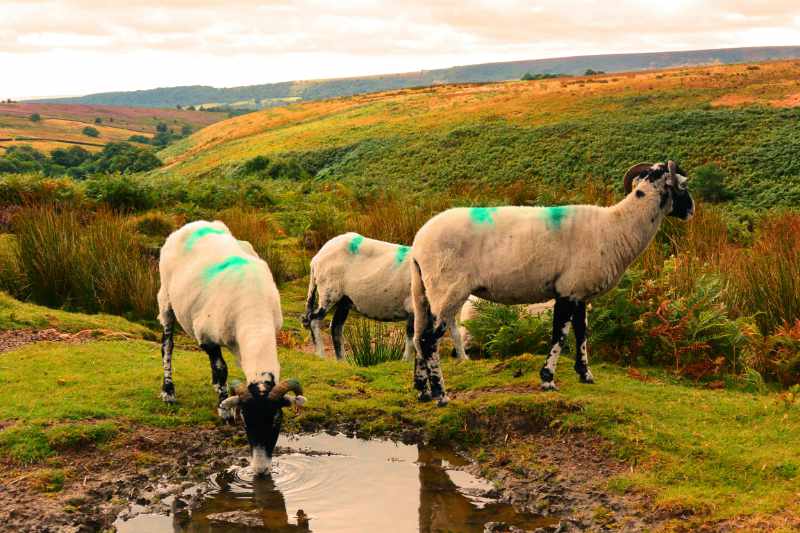
Lambs are out in the fields, bouncing around like they’ve got no care in the world. Meanwhile I’m scraping ice off the truck again.
The rest of the UK is talking about the first signs of summer. Up here, I’m mixing my homemade de-icer of white vinegar and water and driving around smelling like a chip shop.
If you’ve not guessed, we had another proper scattering of snow and ice the other week.
In the middle of standing outside and mixing my homemade de-icer concoction (and seriously considering my choice that thought it was sensible to purchase five litres of white vinegar rather than spend £2 on the pre-made car accessories stuff), a quad drew to a halt. It was Stephen, a local builder and sheep farmer, out checking his flock like it was just another day.
We often stop for a chat, and whilst I know bugger all about sheep farming, I find his tales about shepherding fascinating.
Now in a world full of technical fabrics, weatherproof membranes and clothing that promises to handle anything the elements can throw at it, Stephen was dressed exactly as you’d expect of a frugal Yorkshireman…Dunlop wellies, a balaclava, and a Harris Tweed coat with matching trousers that, truth be told, wouldn’t have looked out of place on a sheep farmer 100 years ago.
This was in sub-zero temperatures and facing every element of inclement weather that The Dales could throw at you.
And yet he was perfectly equipped for the conditions. No drama. No fuss. No reliance on the latest “solution”. Just something that works, as it had done for centuries of outdoor folk.
And that got me thinking…
I’d had a chat earlier in the week with a former CEO who had a firm background in risk early in his career. We had put the world to rights and discussed that at times, retail had blindly stumbled into a journey, convinced that newer means better.
That more technology equals more control. That the latest system, the latest camera, the latest AI overlay will somehow solve problems that have been around for decades, without paying appropriate attention to the basic nuts & bolts of risk.
But it often doesn’t.
Because like Stephen’s coat and trousers combo, what actually supports solutions tends to be far less complicated and far more grounded in experience. Clear processes. Consistent execution. Understanding where your real risks sit.
Not just layering more and more “solutions” on top of weak foundations.
I see it all the time. Businesses investing heavily in technology, but still losing money through the same basic gaps. Poorly controlled processes. Lack of accountability. No real understanding of how loss is actually happening.
It’s the equivalent of buying the most advanced weatherproof jacket on the market and still not knowing how to read the sky and when to wear it.
Stephen doesn’t need the latest gear because he understands his environment. He adapts to it. He works with it, not against it.
That’s what effective risk management looks like.
Not chasing the next big thing, but building something that works, holds up over time, and can deal with whatever conditions come your way. The tech should be the icing on the cake and never a substitute for core processes and controls.
Because whether it’s snow in April or shrink in a retail business, it’s not about what you’ve got on paper.
It’s not even about the weight of your technical solutions.
It’s about whether it actually works when the weather turns and you are suddenly faced with a storm, when you should be basking in the first rays of summer.