

Sometimes the only barrier you need to break is in your own mind…
Aha! A good news story at last.
I can’t be the only one who feels like the news is mostly gloom and doom these days. So it was refreshing to see a positive story among the headlines recently.
The article was about the courageous actions of a 13-year-old Australian boy, who had swam for hours through rough waters in fading light to save his mother and two siblings.
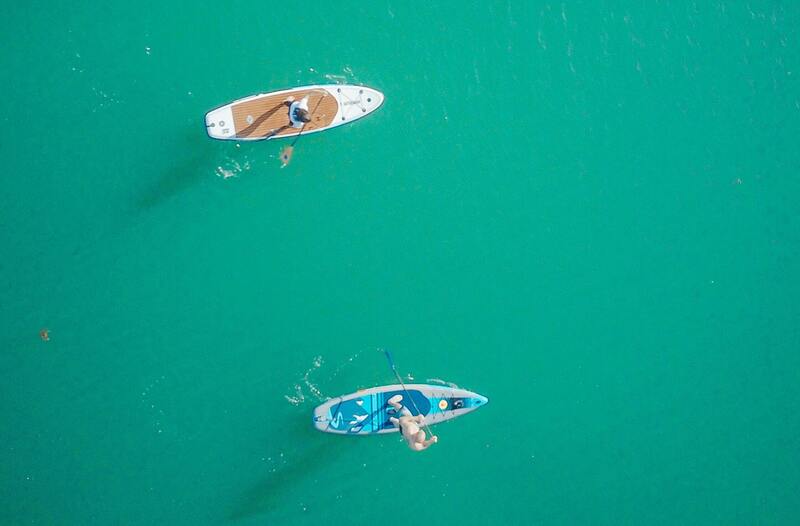
The family had been paddleboarding and kayaking at Geographe Bay in the south west of Western Australia when strong winds pushed their inflatables dangerously off course.
The teenager began to paddle back to shore to raise the alarm but his kayak took on water so he swam the remaining 4km. Once ashore, he raised the alarm, triggering a large-scale search that ultimately led to his family’s rescue.
What a champ!
I find it fascinating how “ordinary” people can rise to extraordinary heights when circumstances demand it.
The truth is that we rarely realise how tough we are until life removes the option not to be. The world is full of examples, from athletes overcoming life-changing injuries or disabilities to return to elite competition, to bystanders somehow summoning the strength to lift cars off trapped strangers in moments of crisis.
Now I can’t claim to have achieved anything quite as “superhuman” as that, but like most of us, there have been times in my life when I’ve had to “dig deep” and resist that natural flight response (these days that pretty much applies to any race I tackle over a 10k!)
My son Riley is a keen follower of David Goggins, the American former Navy SEAL and ultramarathon runner who has earned the nickname “the toughest man alive.”
Goggins became a Navy SEAL after losing over 100 pounds in three months and completing the notoriously brutal BUD/S training, enduring three separate “Hell Weeks” in one year due to injuries and rollbacks.
He pushed through pneumonia, stress fractures, and even a broken kneecap to earn his place among America’s most elite special operations forces.
Goggins later set a world record for the most pull-ups in 24 hours (4,025 if you were wondering), finished fifth in the punishing Badwater 135 ultramarathon, and completed multiple Ironman triathlons – all whilst living with a congenital heart defect.
So how did he do it? Much of his philosophy centres on the Navy SEALs’ so-called “40% Rule”: the idea that when your mind insists that you’re done, you’ve likely only tapped into about 40% of your true capacity. In other words, the body often has far more in the tank than the brain is willing to admit – we just have to learn how to access it.
Perhaps that’s why reality endurance shows like SAS: Who Dares Wins are so popular. We’re fascinated by people being pushed to the brink; not because we enjoy the suffering (or maybe you do!) but because we recognise something in it. We sense that under the right circumstances, we too might surprise ourselves.
Of course, this doesn’t mean we are limitless or that we should ignore genuine physical warning signs, but it does suggest that our perceived limits are often negotiable.
Which brings me to the events of the past few days…
This week, Trellidor exhibited at the Secured by Design Annual National Crime Prevention Event in Cirencester. Alongside showcasing the formidable strength of our shutters and doors, we invited attendees to test their own strength by competing in a strongman-style challenge to lift one of our security doors.
It was fantastic to see people stepping up, getting stuck in and proving – often to themselves more than anyone else – what they’re really made of.
As a company, Trellidor is all about physical barriers and keeping intruders out. But when it comes to our own lives, the most formidable blockades we face are rarely made of steel. They’re the invisible ones. The quiet doubts, the self-imposed limits, and the voice that tells us we’ve reached our edge long before we truly have.
The question is whether you’re willing to push past them…