

Will we now see a rapid roll out across the sector..?
On Sunday, I’ve got the ATHX competition coming up.
I’ve trained for years, I know my strengths, and I know exactly where I’m going to struggle.
I’m strong enough… I’m just not sure if I’m fit enough. That’s the honest truth.
I saw something online recently that summed it up perfectly how to be the fittest you can be: run more than a lifter and lift more than a runner.
It’s simple, and it’s bang on. Strength without conditioning only gets you so far, and conditioning without strength has its limits too.
That’s where I’m at. I know exactly what I can lift, I know the numbers I’ll hit in the strength section, and I also know that when it comes to the endurance and the metcon, it’s going to hurt.
There’ll be moments where my legs won’t want to jump, my lungs won’t want to work, and the temptation will be to slow down or stop. But you don’t stop. You manage it, pace it, deal with what’s in front of you, and keep moving.
And funnily enough, that mindset came up again when I looked at the news this week.
There’s been a lot of movement around policing and retail crime. The Home Office has announced plans to reduce the number of police forces, improve national coordination, and put more funding into tackling shoplifting and organised retail crime.
From a non-policing perspective, this just makes sense. Forty-three different forces, forty-three different processes, forty-three different systems… it’s inefficient.
If we want better outcomes for business crime, we need consistency, scale, and joined-up thinking.
That consistency matters for retailers too. If every force works differently, retailers are forced to adapt to dozens of reporting models, thresholds, and expectations. Standardisation creates clarity, and clarity creates action.
But the biggest thing that caught my eye this week was Sainsbury’s expansion of live facial recognition.
They trialled the technology in a small number of stores and saw a 46% reduction in theft, harm, aggression, and antisocial behaviour.
That’s not marginal. That’s transformational.
Even more telling is that 92% of prolific offenders didn’t return to those stores. Not because they were caught, but because they were deterred.
This is the part people often misunderstand about live facial recognition. It’s not about chasing offenders through aisles or making dramatic arrests. It’s about prevention, transparency, clear signage, lawful reference lists, and good customer service triggered at the right moment.
Most offenders make a choice long before a crime happens. If the environment changes, their behaviour changes too.
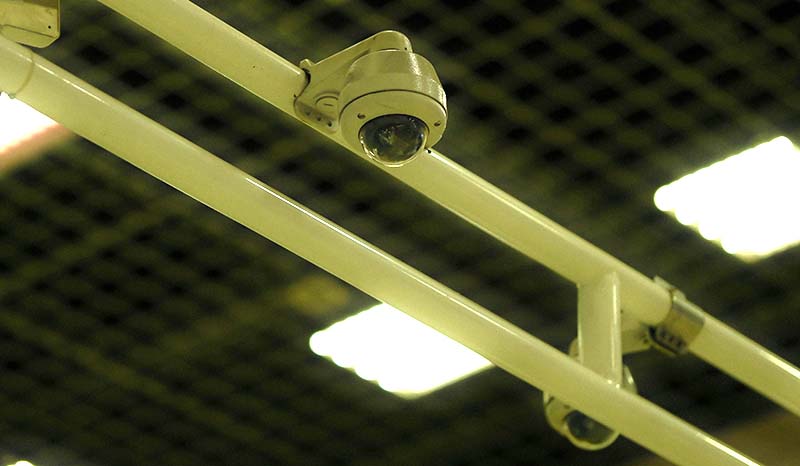
I saw the alternative myself recently. I was in a large bakery chain in Bradford, waiting at the till, when a man walked in, picked up a couple of sandwiches, said thanks to the staff, and walked straight out. Staff shouted that he was on CCTV. He didn’t care. Why would he? CCTV after the fact doesn’t stop anything. It just records it.
That moment sums up where we are as a sector. We’ve relied on tools that observe crime instead of preventing it, and then we act surprised when offenders stop caring.
What Sainsbury’s has done matters because they have ‘moved’, they’re not the first but certainly the biggest so far. For years, everyone has been waiting for someone else to move. They’re waiting for permission, reassurance, and for the nervousness to disappear.
Well, now one of the biggest retailers in the country has demonstrated real, measurable impact.
So the question becomes simple: what are we waiting for now?
Just like training, you don’t get fitter by talking about it. You don’t improve conditioning by watching someone else run. At some point, you step onto the floor, accept it’s going to be uncomfortable, and trust the process.
Retail crime is no different. If we genuinely care about protecting staff, reducing harm, and restoring confidence on the shop floor, then we have to normalise the tools that work.
Live facial recognition works. The data is there and the impact is clear. But the biggest risk to the sector right now isn’t technology, it’s hesitation.
And just like on Sunday, when my legs are burning and the box looks higher than it should, the only way forward is to keep moving.