

Where’s the real work done?
There’s a phrase you hear a lot in business circles.
The idea that ‘most of the real work doesn’t happen in the meeting room’.
The idea that it happens around it.
I’ve never taken that too literally. I don’t play golf, for one thing, so I’ve always assumed it’s more of a shorthand than an instruction – a way of describing the moments that sit just outside the formalities.
We all spend a huge amount of time focused on the structured stuff, and rightly so. The agendas, presentations, demos, carefully worded emails, and calendar invites – they all matter. Those things are the backbone of any functioning business relationship.
But there’s another layer that’s harder to define and just as important.
The conversations before the meeting officially starts. The coffee afterwards. The chats that wander a little once the room relaxes.
I’ve found myself thinking about that a lot lately. Not because I want to downplay the working day – far from it – but because those informal moments often add the context that formal settings simply don’t allow for.
They’re where you get a clearer sense of how people think. What they’re grappling with. What’s changing in their world.
Scott and I have a monthly catch-up with Helen Clayton, formerly of Sainsbury’s and now running Solstice Risk Advisory. Helen works across retailers and solution providers, and she has an excellent feel for the wider landscape – the themes that keep cropping up, increasingly common challenges, and questions people are asking plenty in this industry.
She has a knack for connecting dots without ever overstepping them. It’s less about specifics and more about perspective.
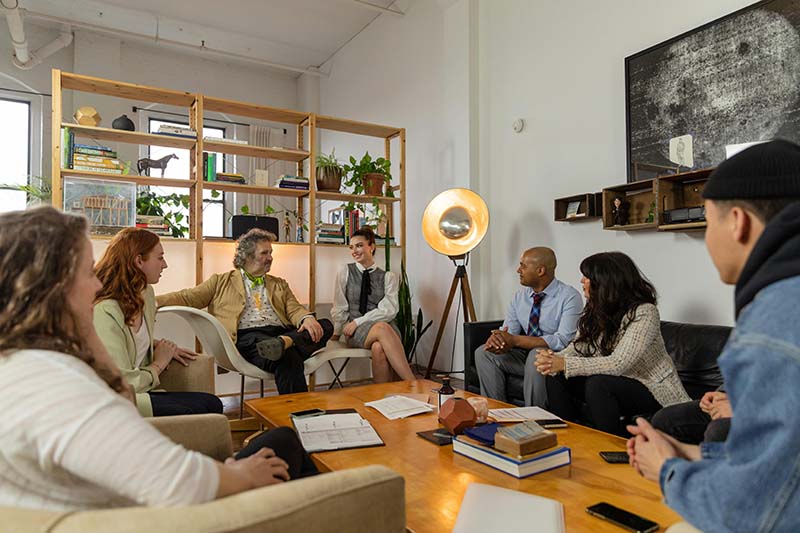
Our most recent catch-up happened to be hosted at the London HQ of one of the organisations Helen works alongside. There were several other businesses in the room too – different sizes, different specialisms, all coming at similar problems from different angles.
On paper, we were there to listen and learn. And we absolutely did.
But those settings also give you something else: a sense of alignment. You start to understand where views overlap, where they diverge, and whether there’s shared ground worth exploring further down the line.
What struck me most wasn’t anything said in a slide deck. It was how the conversation evolved once the formal session ended. The questions people felt comfortable asking. The ideas that surfaced once there was a bit more space to think out loud.
That same dynamic shows up at industry dinners and awards evenings too – events many of you will have been to over the years. Yes, they’re social. Yes, they’re enjoyable. But they also create room for conversations you don’t quite get to have during a busy conference day.
Those moments don’t replace the work. They complete it.
They’re where trust starts to form, where nuance is added, and where you’re reminded that most progress in this industry still comes down to people understanding one another a little better.
Now, to be clear: I’m not suggesting every meeting needs an evening attached to it. We’d all be in trouble if that were the case. But I do think it’s worth recognising that time spent together – away from the rigid structure of the working day – has real value when it’s done properly.
Not as a tactic. Not as theatre. Just as a continuation of the conversation.
Do the prep. The thinking. The graft.
Then stick around. Ask the extra questions and stay curious.
You never quite know what might come out of it.