

“Change is the law of life. And those who look only to the past or present are certain to miss the future” – John F. Kennedy
Regular readers will know that I live on the Dorset coast.
It is a beautiful part of the country. From the dramatic clifftops and stunning beaches to the charming market towns that dot the landscape, it often feels like the very best of England.
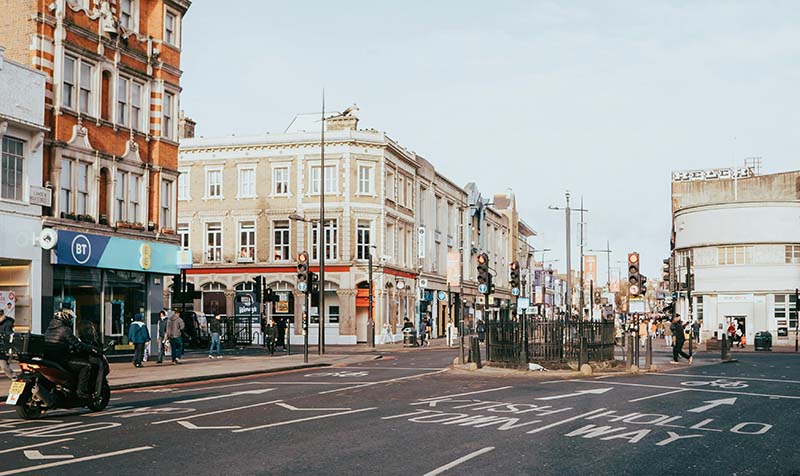
But for all its charm, I have to concede that Dorset is not immune to the challenges facing High Streets across the UK.
If you have ever visited this part of the world (if not, you should) you will know that the county is home to some brilliant shopping experiences. Pick the right town and you will find a bustling High Street brimming with independent shops, cosy cafes, butchers, bakeries and, if you’re lucky, not a Costa or Starbucks in sight!
Yet travel a few miles down the road and the picture can often be very different. For every thriving market town High Street, there are at least two others that are blighted by boarded-up shop fronts, run-down facades, and deserted pavements. And those units that aren’t shuttered or vandalised are typically betting, vape or charity shops.
It’s a familiar story that is repeated up and down the country, to the point where it barely raises an eyebrow anymore… which of course may be part of the problem.
So I was pleased to hear that the Government is at least attempting to tackle the issue.
This week, the Communities Secretary Steve Reed told local authorities to use compulsory purchase powers to buy up empty shops and bring them into community ownership, removing what he described as a “blight” on the High Street.
His argument is that too many empty properties are owned by international investors who bought them as part of job lots and, in some cases, may not even realise they own them.
Alongside this, a £150 Million cash injection will be targeted at areas where High Streets have been hit hardest in recent years, with the aim of restoring a sense of pride in local communities. Other measures include action to curb the proliferation of betting shops and steps to end so-called “pub deserts” by preventing the loss of the last community facility in an area.
“They won’t be what they were in the past but they can become vibrant, lively places that people want to go to,” Reed told Times radio.
As someone who is passionate about retail and who spends much of his working day thinking about how to help retailers survive and thrive, any measures that breathe life back into our town centres can only be a good thing.
On a practical level, I’m also pleased that ASEL is playing a small part too, through a new service specifically designed to support vacant and void properties. Our new one-stop shop offering, which encompasses everything from security and monitoring to property inspections, compliance checks and pest control, aims to give property owners confidence that their sites are safe, compliant, and well-managed – even when they’re empty.
However, as vital as all these measures are, I can’t help feeling that there is a bigger issue at play here. Because this isn’t simply a story about empty units, absentee landlords or even funding gaps. The decline of the High Street is better understood as a symptom of deeper societal and behavioural shifts that have reshaped how we live, shop and socialise.
Take pubs, for example. Putting aside the cost-of-living crisis, fewer people are drinking alcohol. A recent NHS-commissioned survey of 10,000 people found that almost a quarter of adults in England did not drink alcohol in 2024, up from just under a fifth in 2022.
The trend is being driven largely by younger generations, who are more health-conscious, more financially cautious, and far less inclined to drink simply because it’s Friday.
Add to that the rapid improvement in low- and no-alcohol alternatives, many of which now taste almost as good as the real thing, and you begin to see the challenge. Pubs are increasingly serving non-alcoholic options, which is sensible and welcome, but it does raise an awkward question: if you’re not drinking, do you still need a pub in quite the same way?
Please do not for one minute think that I don’t want to see our pubs survive and thrive. I am firmly in favour of saving our local watering holes… where else would I thaw out after a bracing walk along the beach with my two indefatigable spaniels!?! But the uncomfortable truth is that changing habits mean we can’t preserve every pub simply by wishing hard enough.
The same logic applies to the shifts we’ve seen in retail more broadly. We have all watched how the internet has fundamentally altered how and why we shop. That doesn’t mean the High Street is doomed. But if our local communities and High Streets are to thrive again, they must reflect how people actually live today, not how we nostalgically remember the “good old days” (I can practically feel my daughter Martha rolling her eyes as I write that!).
Government intervention and practical support will certainly help, but ultimately the future of the High Street depends on an honest acceptance of how society has changed, and a willingness to design places that serve the lives we’re living now – not the ones we’ve already left behind.