

Why policing’s structural problems matter more than we admit
It’s been one of those weeks where real life takes over first.
The gym’s been going well, and I’m on weighted pull-ups hanging a 15-kilo plate.
Training is stepping up now the competition in February is getting closer. Saturday mornings are pretty much written off as fitness mornings.
Outside the gym, the jobs at home caught up with me. I spent hours painting woodwork again, the kind of task you think will take an afternoon and somehow absorbs an entire weekend.
Then on Sunday everything shifted when my father-in-law collapsed. We were straight over, helping get him stabilised and into hospital. Thankfully he’s doing better, but it made the whole weekend a bit of a blur.
We did manage our early Christmas night out. We had a meal, a few beers and some karaoke,
It was a good laugh, even if I did feel it the next morning.
And after all that, the thing that landed hardest for me was this: everything goes smoother when there’s structure.
In life, in work, in the gym. When everyone knows how things are supposed to run and who’s responsible for what, the pressure eases. When the structure is messy, you feel it instantly.
Which brings me to the article that caught my eye this week.
Home Secretary Shabana Mahmood described the current structure of policing across England and Wales as “irrational.” And she’s not wrong.
We’re talking about 43 separate forces, plus Scotland and Northern Ireland, each with their own systems, platforms, software, evidence processes, and operating culture.
From a retail crime point of view, the cracks show everywhere.
Travelling offenders move across boundaries and suddenly it’s a jurisdictional debate about whose problem they are. One force logs an incident, the next ignores the pattern. It’s not because the officers don’t care, but because the system isn’t built for joined-up thinking.
Even the technology tells the same story.
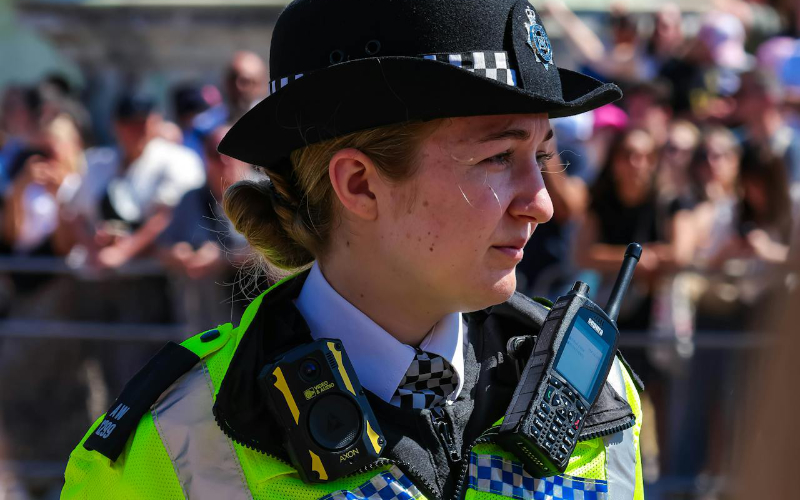
One force uses Athena. Another uses Niche. One adopts Axon for body-worn video, another sticks with Reveal. Even uniforms vary. And if you work in the private sector and need CSAS accreditation, you don’t get one approval, you get however many you need for the forces you work across: Thames Valley. Hampshire. West Midlands. They’re all separate and all duplicated.
And now we’re looking at another shift. By 2027, Police and Crime Commissioners will be phased out in favour of mayors or councils taking on their responsibilities.
I’ve had good experiences with PCCs. They’ve funded, and supported important work, opened doors, and given businesses a route into the policing world. Whether they met every objective is another debate, but they did make engagement simpler, and I liked them.
With the changes coming, I’ll be auditing all the forces we engage with. Knowing how each one works now means when the model changes, we’re not starting from scratch. I’d encourage retailers and other security partners to prepare in the same way.
If a national, or regional unified models ever arrives, it could transform reporting, evidence processes, and the handling of organised retail crime. But only if we’re ready.